Last century, we ate home-grown fruit and veg in season – and knew when it was time to pick it. Mums were home to cook the meals – and cakes and biscuits, pumpkin scones, apple pies, fruit cakes, gingerbread, coconut slice, cinnamon teacakes, lemon meringue, carrot cake. The puddings – jelly, custard, stewed fruit, plum pudding, macaroni, vermicelli, lemon sago, creamy rice, bread & butter pudding, mulberry pie. All good wholesome food that kept us healthy! Where have we gone wrong? Our cravings tell us what is missing nutrition-wise in our diet, that our body needs to function properly and in good health.
When we think of jellies we tend to think of kid’s parties. Jelly used to be a popular sweet. Gelatine was very much part of our diet in by-gone years but today has largely disappeared from our tables. Shop-bought cooking gelatine is an inexpensive means of obtaining Gelatin Hydrolysates with equal potency to significantly more expensive pharmaceutical forms.
Here is some information on the benefits of butter, as well as how to make stock and a quick vegetable soup.
Resistant starches reduce blood sugar. Small amounts of resistant starch (about 5% of the total) are produced when some starchy cooked foods, such as toast, potatoes, pasta and rice, are allowed to cool before eating. Freezing before re-heating is even better! Check this PDF out for more information.
Eat more dairy? Or less? We want to protect our bones from osteoporosis, but can we over-do dairy? Too much calcium, as well as causing cramps and muscle aches, can cause fatigue, exhaustion, depression, anxiety, panic attacks, headaches, paranoia, loss of memory, poor concentration, crying spells and insomnia.
Lemons can be helpful to keep your blood sugar levels stable, reduce reflux and can help with asthma and nausea. Protein is also good for stabilising you blood sugar level, and a good source is eggs.
Pumpkin seeds can reduce antioxidants, reduce cholesterol, reduce osteoporosis, improve sleep, reduce inflammation, boost energy, improve urinary function. They can be eaten raw or roasted.
When I started my nursing training at Fremantle Hospital 50 years ago in 1965, one of the first things we had to do was go back to school to learn cooking. I couldn’t believe it! We even had the same cooking teacher from John Curtin High School that I thought I had left behind me with the finish of official schooling now that I was working!
Invalid cooking was part of our basic training and meals in hospital were an important part of getting patients better. Nurses were in charge of meals – we didn’t have dieticians. Our Ward Sisters and Staff Nurses trained us in what foods to give each patient – and this depended on their medical condition and to some extent their food preferences were taken into account. And some were very fussy eaters.
I have learnt a lot more since then and there is a lot more research now available. But it is pretty basic really – we eat to supply our bodies with the nutrients needed to sustain a healthy life. If we don’t eat, we die. But before that our health goes down hill.
So we eat to survive and the foods available for us to eat were those that grew or lived around us where we lived. For thousands of years, people lived in the same part of the world and ate the same foods, prepared in traditional ways. This is what we are programmed for. This is what it is easiest for our bodies to deal with. We have developed the ability to digest and use these foods to survive. And the foods around us have developed to survive in the soils and climates they (and we) grow up in too.
This has been the basis for the research I have been involved in with our Polio Clinic and OSWA here in Perth since 1992. The more we investigate this, the more we realise that instinctively we do all really know what we need to eat – BECAUSE IT TASTES GOOD TO US!
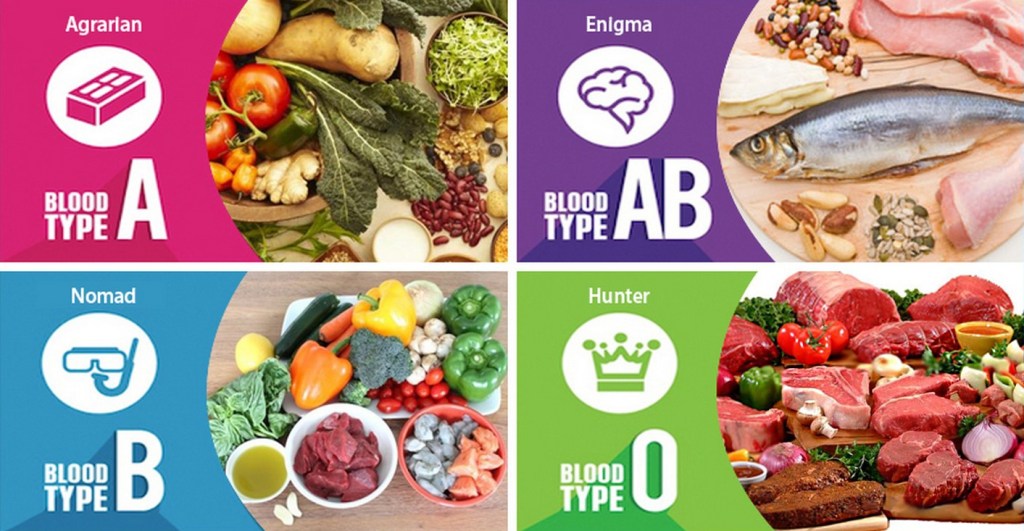
Even in the same family, because we have different blood groups, we can choose to eat with more or less cooking and different things first. One of my sons eats all his veg then all his meat while I must have a piece of meat and some veg with every mouthful. I can’t eat one without the other.
Our research has shown that people who are A or AB blood group don’t usually like legumes ie peas and all sorts of beans, even though they may be eating them believing they are good for them. In fact it has been shown that legumes and lentils can cause clumping of red blood cells resulting in destruction of these useless clumps by the body which thus leads to anaemia. This can happen with other blood groups too but more often in A or AB. I have solved this anaemia in many people by telling them to stop eating legumes. It takes 6-8 weeks to regenerate your red blood cells and so then the GP sees an improvement!
So there is a valid reason behind some natural food likes and dislikes. Babies and animals eat by instinct. They try it and like it or reject it. Most of us have had instinct trained out of us with “Eat everything on your plate!”
Ever wonder why grandma bothered with the long soak, drain, rinse and boil sessions when preparing oatmeal porridge, baked beans and other grains? Or why we are supposed to throw away the water cabbage is cooked in?
There is a good reason that modern research has revealed. Overnight soaking, changing the water, adding sodium bicarbonate to the water, fermenting, sprouting and cooking – all will alter phytates and decrease or change lectins (or the bad parts of some foods ie with the wrong lock and key) and thus help free up the good nutrients we need.
Our bodies and our foods have and make enzymes that are part of the lock and key effect. The difference in Blood Groups is the slight changes in the surface sugars on all cells, not just red blood cells. It is the complex proteins known as lectins in the foods that can react badly with our body cells. This can change between blood types and food types. The lectin content of foods differ year to year and crop to crop. Climate and soil content affect these changes.
Grains, cereal and legume (especially peanut and soybean) lectins are most commonly associated with reports of digestive complaints. Legumes and seafood have the most abundant sources of lectins in most diets. When lectins affect the gut wall, a broader immune system response may occur as the body’s defenses move in to attack the perceived invaders. Symptoms can include skin rashes, joint pain, leaky gut, sore tummies, bloating, reflux and general inflammation, including allergy-type reactions.
Instinctively we recognise body reactions which we may register as food likes and dislikes as our bodies try to keep us on the right track with the foods we choose to eat. For instance, the summer Valencia orange gives me a tummy ache but the winter Naval orange doesn’t, and tastes better to me. O and AB prefer the taste of the Valencia orange. I like mulberries when they are red and tangy (a B and A2 blood group preference) while the other blood groups like them when they are ripe and black. Different lock and key.
If we eat foods that naturally appeal to us and taste better, we are more likely to be on the right track. Let each person choose what to put on their own plate ie – help yourself.
This work on lectins is not new. Lectins were first described in 1888 by Stillmark and research on lectins was done by Ehrlich, who was considered to be the Father of Immunology. If a lectin with a ‘similar’ key comes in contact with one of these ‘locks’ on the gut wall or artery or gland or organ, it can ‘open the lock’, ie ‘break in’, disrupt the membrane, damage the cell and may initiate a cascade of immune and autoimmune events leading to cell death.
Our food likes and dislikes vary with taste, colour, traditional food exposures and blood groups. We should eat the foods of our ancestors – European or Asian, Indian, Chinese. Thai foods are for Thai people! We all have particular enzymes that we inherit and make – that enable us to process and digest safely certain foods but not others eg lactose intolerance, coeliac, nut/eggs allergies.
Compatibility with food types takes thousands of years – we don’t change overnight! Blood types and traditional exposure give key guidelines to what food is suitable to different people. If you don’t have the right key you can’t unlock the door and enter. Each is made to fit the right place/food. Enzymes and co-factors are made in the body from vitamins and minerals and they speed up the digestion of food by enabling chemical reactions, bringing molecules together or pulling them apart. Enzymes lower the amount of energy needed for an action to occur.
Even the amount of meat – ie protein (animal-based food) to veg – ie carbohydrate (plant-based food) on your plate will vary according to your blood group. Instinctively we will put the right proportions of the right foods onto our plates if we trust our instincts – forget what you have been told or what you have been taught or read is right. Ask yourself what you really want. Remember that cravings may actually be trying to tell you something you are needing and we might have to analyse the truth of them.
O Blood Group – Warm/Hot climate
Not hungry till 10am -11am
Picks at food thru day when hungry
Eats large main meal at night
Lightly cooked meals eg stir-fry, salads
Strong digestive system – works while sleeping
Wakes with energy – ready to go
Sport activity gets brain going, invigorates
A1 Blood Group – Temperate cool climate
Hungry when wakes – needs food to warm up eg cooked breakfast, main meal midday
Light meal at night – digestion poor when asleep
Long cooked soups and stews, casseroles aid digestion
Grows grains – rye, barley.
Ripe fruit but not tropical
Keeps animals for by-products ie dairy, eggs, wool
Only eats animals when getting older or bred for food
Catches fish in rivers and ocean
Long exercise exhausts, slows brain function
A2 Blood Group – Extreme cold – Arctic
Scandinavian or Eskimos, Icelanders
3 decent meals of meat, fish, root veg
Strong digestive system
Need to eat for warmth and energy
Berries main fruits – some apple, orange, pear, grapes –
NB stone fruit need frost to set fruit so OK
No tropical fruits can be grown in Arctic
No grains grown in snow– may tolerate rye, spelt, rice
Need lots of protein – meats, fish, fowl, deer, whale, bear
Long cooked meals – stews, soups, broths
B Blood Group – Cold climate – mountainous
Developed in Himalayan mountains, spread by gypsies
Needs 3 reasonable meals – balanced protein and plant foods each meal – get instant reactions to wrong foods
Need food for warmth and energy
New-seasons fruit – tangy, not quite ripe
Cold climate fruit but ok with some warm eg bananas, coconut but not pineapple
No good with any fowl but eggs ok
Cold water fish – deep ocean or cold river, no tuna. Salmon ok
Mountain rice not paddy rice
A1B Blood Group – Warm climate
Developed in Asia and South Sea islands
Prefers more vegetables than meat
Big fish eaters, but not big on chicken or any fowl
Tropical ripe fruit – oranges ok but not lemon or bananas – good with pineapple but not apple
Not good with most nuts, dislikes beetroot
Likes stir-fry, lightly cooked meals
Instant reactions to wrong foods so may be fussy eater
Likes potato and root veg, ok with grains
Avoids legumes esp peas, but eats other greens
Dislikes stress, usually easy-going, hard workers
A2B Blood Group (very rare) – Cold Climate
Mostly as for A2 but may need to avoid foods A1B has problems with too eg beetroot, apples.
Our feet can really affect how well we feel, whether they are too hot, too cold, swollen, aching or sensitive. Richard Bruno’s article on how to deal with cold feet is reproduced below, or you can download the document using the link. There are also articles on aching feet, what problems can be associated with polio and what our feet are telling us about our health. Heel and foot pain is not restricted to those with a history of polio, but they are particularly bothersome.
The process that cause “Polio Feet” to turn blue and cold and become difficult to move when it’s only cool is the same process that caused paralysis after the original polio.
The Polio virus got into the spinal chord and either destroyed or damaged the anterior horn cell motor neurons that transmit the message to move from the brain to a muscle. When those neurons were damaged, or especially when they died, they disintergrated and the muscle fibers that used to be turned on by those cells no longer were.
There is another kind of motor neuron that was affected by the virus – the motor nerve that controls the muscle around your blood vessels. When these muscles died, there were no motor nerves to tell the blood vessel to contract; if the blood vessel cannot contract, blood ‘pools,’ especially in the veins. When the blood pools in the veins, it is going to be blue, because venous blood is not oxygenated.
Polio feet are caused by warm blood that should be in the center of your body, flowing out into the hands, arms, and especially the legs (since gravity is pulling the blood down). The warm blood pools in the surface of your skin, and because the blood vessels cannot contract, the result is “polio feet.” The venous pooling causes your blood to radiate heat into the environment. People who had polio keep the world warm, unfortunately at their own expense. The price of this is a thorough cooling of the limbs and all tissues of the limbs.
When heat leaves the veins, the motor nerves that lie near the surface of the skin start to cool. The muscles that lies just a bit below the surface starts to cool. The connective tissue that connects muscle to muscle, and muscle to bone starts to cool and stops being elastic so it is harder for it to move.
When the motor nerves aren’t functioning well, the muscles aren’t going to function well; if the muscles don’t function well, there is going to be muscle weakness. We think that muscle weakness and the loss of body heat are causing fatigue; and we think that people who lose all their body heat into the environment are burning calories to maintain their body temperature, so there are fewer calories to keep moving.
People who had polio should dress as if it is 20 degrees colder than it actually is, but you should dress in layers so you can control your body temperature and not pass out from a rapid flow of blood away from your head as your arteries warm.
The bottom line is to keep warm, stay cool and:
Use polypropylene socks and underwear by Gortex Thinsulate.
Here is what potassium is needed for, and how you might know you are needing more. While there are plenty of options for taking tablets to replace your stores, finding it in your food is much more effective and enjoyable. Here are some recipes for potassium broths.
Depression is characterised by extreme tiredness, bouts of despair and negative thinking. It ranges from feeling low or sad to a debilitating illness. It is important to recognise the early symptoms because the illness quickly escalates into a loss of insight and control and feelings of guilt and lack of self-worth.
This paper was presented by Selma Harrison Calmes, M.Dat the International Polio Network’s Eighth International Post-Polio and Independent Living Conference in St. Louis, Missouri, June 8-10, 2000.
Dr. Calmes’ other article on this website (from 2009) “Summary Of Anesthesia Issues For Post-polio Patients” was primarily intended for physicians:Anaesthetic Papers for Polio
Here are some specific concerns about pain relief:
#1 Deadly Pain Med: Cox-2 Inhibitors (Celebrex, celecoxib) Those taking 400mg doses have 250% greater risk of dying from heart attack or stroke … and those taking the 800mg doses have 340% times the risk!
#2 Deadly Pain Med: Nonsteroidal Anti-Inflammatory Drugs or NSAIDs (Advil, Aleve, ibuprofen, naproxen) The odds of dying from taking an NSAID after just two months is around 1 in 1,200. NSAIDs cause gastrointestinal ulcers and severe bleeding, so short courses (three days) are advised.
#3 Deadly Pain Med: Opiate-Based Pain Meds (Vicodin, Lorcet, Norco, Percocet, Percodan, hydrocodone, oxycodone) Most of the deaths in the U.S. from drug overdoses were caused by opiates. Use the smallest amount you need.
#4 Deadly Pain Med: Paracetamol / Acetaminophen (Tylenol) Every year, more than 56,000 people visit the emergency rooms due to acetaminophen overdoses. It’s the leading cause of acute liver failure—causing nearly half of all cases! However, taken in the correct dosages, it is one of our safest drugs.
#5 Deadly Pain Med: Salicylates (Aspirin, acetylsalicylate) Higher doses or prolonged use at the lower dose—even in buffered or coated form—can double your likelihood of perforated ulcers and gastrointestinal bleeding. Ensure you use the correct dose.