Carnitine – how it really works

I was asked to the recent International Polio Conference to speak about our carnitine research here in WA. I have been meaning to simplify for the newsletter, what we have learnt since we started looking at blood levels of carnitine back in 1996 – so here’s 12-years worth of our carnitine journey. We couldn’t have done it without all of you – our members who have gone and had those blood tests done! There is also a 2016 update available.

Carnitine is an amino acid ie part of protein, and is found in our diet primarily in red meat. Avocado is the only reasonable plant source. The redder the meat the better – pork has only half and chicken only one tenth of the carnitine in red meat! We should get 75% of our needs from our diet and our bodies can make 25% – but only if the other nutrients needed are present in the body and you have muscles to store it!

How it really works. Carnitine transports protein fats into the cell so they can be broken down to produce energy to run the body. More energy is produced this way than using carbohydrate foods. Insulin is needed for energy from blood glucose – carbohydrate foods (yield is 36 ATP) but carnitine is needed to get energy from protein fat (energy yield this way is 129 ATP ie longer energy).
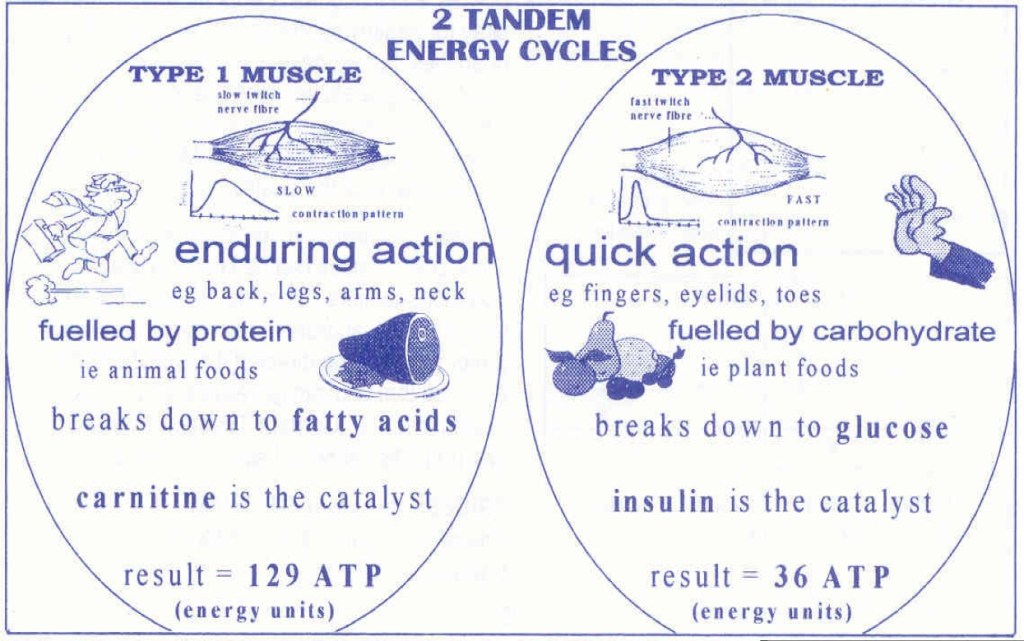
Two types of muscles

We have 2 types of muscles – Type 1 muscles use protein fats as fuel and Type 2 muscles use glucose. There are corresponding nerve types that make these muscles work. Swedish polio research by Borg & Grimby in Post Polio Syndrome by Halsteadi & Grimby Mosby USA 1995 showed that in muscle biopsies on polio muscle there were more Type 1 muscles and that some were abnormal Type 1 that were not as efficient.

This correlates with research documented in Human Physiology by D Moffett Mosby USA 1993 where switching of nerve type changes muscle type and fuel needed. This is in line with the accepted theory of ”sprouting” of remaining nerve endings to enable recovery of muscles affected by polio at the time of acute polio. The rest of this article can be seen here.

carnitine

How do you work out the best dose? You can get it in your diet.

Having enough is particularly good for your heart. And nerve function.

Polio survivors tend to be low in carnitine and Children of polios may also be low in Carnitine.
Alerts

This is a page of links to several diverse alerts which have been saved as PDFs, on topics ranging from anaesthetics, cardiac medications, and a medical alert card.

Anaesthetics and polio.

Anesthesia Concerns for the Polio Survivor.

Beta-blockers and Carnitine – post polio.

Bruno on Cholesterol.

Deadly Pain medications.

Dental and anaesthetic cautions – Bruno.

Drug and Exercise Cautions.

Ezetrol & Statin Warning.

Medical Alert Card.

Medications post polio – Dr Susan Perlman.

Polio Survivors as patients.

Blood pressure

High Blood Pressure: why does it matter? Very high blood pressure can give you headaches, and put you at risk of a stroke, but a moderately high blood pressure over many years puts strain on your heart and increases the risk of heart attack or heart failure. If you need to know more about the signs of a heart attack, click here. Your blood pressure will be higher if your blood vessels aren’t as flexible or stretchy as they were in your youth, which is usually caused by a build-up of cholesterol in large and medium sized arteries. That is why we try hard to reduce your cholesterol. You mat also be interested in Prof Dingle’s perspective on cholesterol. And your doctor may not be aware of the importance of homocysteine.

Reducing blood pressure often relies on medications, but you may be able to reduce it by keeping your weight under control, improving your cardiovascular fitness and making simple dietary changes. Your nutrient balance is important. You should certainly not be smoking. Dr Bruno provides further information about medications for blood pressure.

Ezetrol and statins

Blood Groups

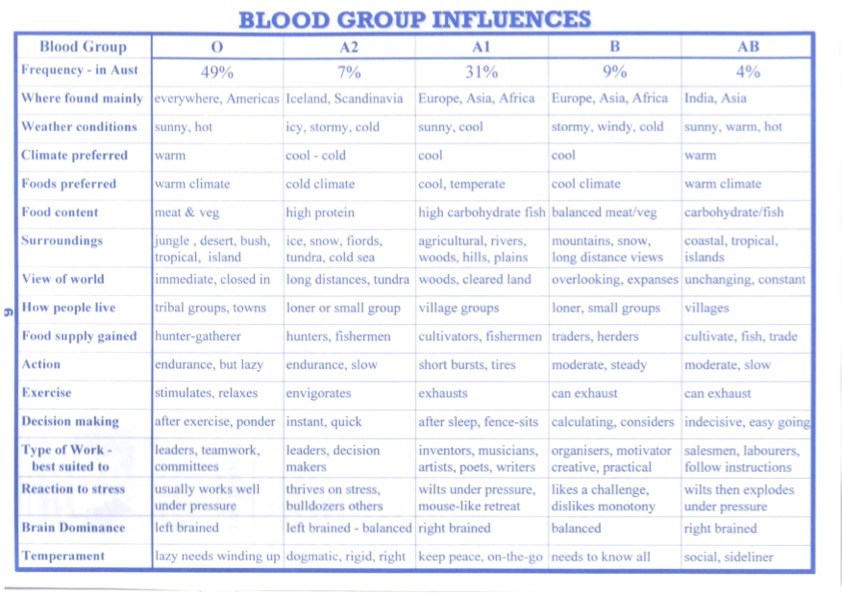
What difference does my blood group make to how I manage as a polio survivor? For a start, it helps to determine how much red meat we need to eat, to get enough carnitine to help with muscle function and post-polio fatigue. Types O and A2 need half the plate to be red meat, and half veggies every day. A1 and AB only need a quarter of the plate to be meat, and three quarters veggies. More red meat may be required for polios.

If we are struggling with health problems, we need to make it easier for our bodies to work – less stressful. By eating the right foods for our blood type, we can ease that stress.

Here are the main points from WA research that started in 1992.

Food groups can be classified as warm- or cool- climate foods. Blood group O and A1B are warm climate blood groups. A1, A2, B and A2B are cold climate blood groups. The others are mixed.

Blood groupVitamin C type
OCalcium Ascorbate
BCalcium Ascorbate with bioflavinoids
A1Sodium Ascorbate (not orange flavoured)
A2BioC (Calcium + Sodium Ascorbate mix)
ABAscorbic acid only